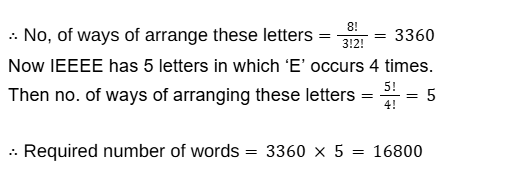
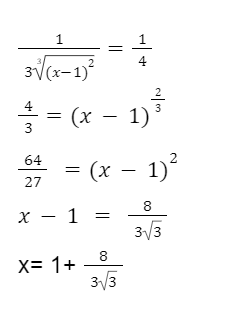
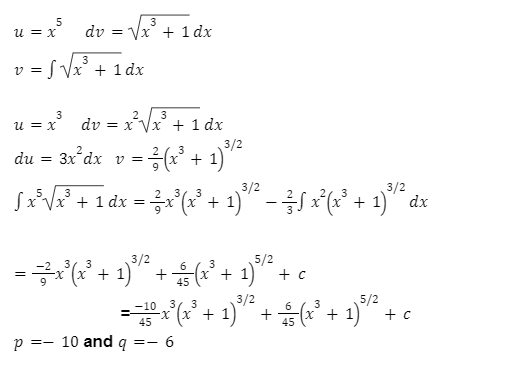
In how many different ways can the letter of the word “INDEPENDENCE” be arranged so that the vowels always come together?
Eight friends A, B, C, D, E, F, G and H are sitting around a circular table not necessarily in the same order. Three of them are facing outward while five are facing towards the centre. There are an equal number of males and females in the group.
C is facing the centre. E is sitting third to the right of C.
F is sitting third to the left of E. Three people are sitting between F and B. The immediate neighbours of B are females. G is sitting third to the right of F. D is sitting third to the right of A. A is not an immediate neighbour of E. The immediate neighbours of E are males and facing the centre. The immediate neighbours of D are females and face outside. The one sitting third to the left of B is a male. No female is an immediate neighbour of G.
Four of the following five are alike in a certain way based on their seating positions in the above arrangement and hence form a group. Which of the following differs from a group?
Study the following information and answer the questions given below:
Eight friends A, B, C, D, E, F, G and H are sitting around a circular table not necessarily in the same order. Three of them are facing outward while five are facing towards the centre. There are an equal number of males and females in the group.
C is facing the centre. E is sitting third to the right of C.
F is sitting third to the left of E. Three people are sitting between F and B. The immediate neighbours of B are females. G is sitting third to the right of F. D is sitting third to the right of A. A is not an immediate neighbour of E. The immediate neighbours of E are males and facing the centre. The immediate neighbours of D are females and face outside. The one sitting third to the left of B is a male. No female is an immediate neighbour of G.
What is D’s position with respect to G?
Eight friends A, B, C, D, E, F, G and H are sitting around a circular table not necessarily in the same order. Three of them are facing outward while five are facing towards the centre. There are an equal number of males and females in the group.
C is facing the centre. E is sitting third to the right of C.
F is sitting third to the left of E. Three people are sitting between F and B. The immediate neighbours of B are females. G is sitting third to the right of F. D is sitting third to the right of A. A is not an immediate neighbour of E. The immediate neighbours of E are males and facing the centre. The immediate neighbours of D are females and face outside. The one sitting third to the left of B is a male. No female is an immediate neighbour of G.
How many persons are sitting between H and C when counted from the left side of H?
PASSAGE
When we imagine a forest, we think of green plants, shrubs, algae, insects, animals, butterflies, mushrooms, flowers, creepers and many more living beings that lend vibrancy to this wonderful aspect of nature.
Dead trees are referred to as ‘snags’. What happens when a tree dies in the forest? No one removes it, let alone destroys it, by burning or burying, it is just left to be. Of what good is a dead tree? Well, when a tree dies, the tree itself may have ceased to live, but it continues to foster the intricate ecosystem of biota that is truly enthralling. A dead tree is a valuable habitat for a host of other species like birds, insects and reptiles. It hosts algae, lichen and moss, which in turn provide food and sustenance to a host of other organisms. That is why in informed societies where forests are part of conservation plans, dead trees - whether standing or fallen - are left undisturbed to exist cheek-by-jowl with other constituents of the forest. A tree that has been dead for a very, very long time might start disintegrating with sustained response to sunlight, rain, moisture and wind. Even as it disintegrates, it turns into valuable compost with minerals and roughage that enriches the soil of the forest.
The Northern Illinois Forestry Association lists atleast 38 species of birds `` that sceavate nest holes or use existing holes in dead or dying trees are 29 species of mammals that use tree cavaliers for various purposes ”.
What is the meaning of the idiom cheek-by-jowl?
Then X is ____
char x = ‘Q’;
switch (x) {
case ‘P’: printf(“a”);
case ‘Q’: printf(“b”);
case ‘R’: printf(“c”);
}
main() {
char arr[10];
strcpy(arr, "gate");
printf(“%d %d”, strlen(arr), size of(arr));
}
#include<stdio.h>
void print (int a)
{
if (a > 0)
{
printf ("&");
a--;
print (a);
}
if (a!=0)
printf ("@");
}
In Order: EACKFHDBG
Pre order:FAEKCDHGB
What will be the post order traversal for above tree?
fun (int i)
{
int sum=0;
for ( ; i >=0 ; i--)
sum = sum + A[i];
return sum;
}
For a value of i (i<n), choose the correct option for the above function fun:
Q, U, I, C, K, S, O, R, T, E, X, A, M, P, L, E
What is the position of the pivot element after completion of the first pass_____?
Apply a single source shortest path algorithm on the given graph using vertex ‘A’ as the source. What is the order in which vertices get removed from the priority queue for the above graph?
S→abA
A→baB
B→aA |bb
Select the correct option [MSQ]

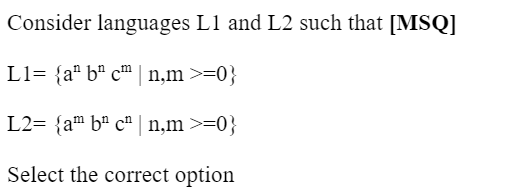
S1: M is a LBA that rejects string w.
S2: M is a LBA and L(M) =Φ
Select the correct option.
G1:
S→AxAzy
A→ yzA | y
G2:
S→AxyzA
A→yB
B→zyB | ϵ
Select the correct option. [MSQ]
E→ P
E→T { }
T→ Q
T→F { }
F→(E) { }
F→ id { print id }
I.Lossless decomposition
II.Dependency preserving
Which of the following is true?
T1: Add 5 to A
T2: Double A
T3: Display A on the screen and then set it to 1 i.e., A = 1.
(Where A is same item in the database)
Suppose transactions T1, T2 and T3 are allowed to execute concurrently. If A has initial value zero, report the possible values of final value of A and the displayed value of A
int data = 0, ready = 0;
| |
void p1 () {
data = 2000;
ready = 1;
}
|
int p2 () {
x=data;
while (!ready) { }
return x;
}
|
What are the possible return values of p2()?
 will be ________. (Upto 1 decimal place) Note: Max throughput for Pure Aloha = 18.4% and for Slotted Aloha = 36.8%
List-I
a. Stop and wait ARQ
b. Go-back-N ARQ
c. Selective repeat ARQ
List-II
1. Each frame sends or resend needs a timer, which means the timer needs to be numbered.
2. Acknowledgement sent when data is delivered to the network layer.
3. Only 2 sequence numbers are used and the window size is 1.
4. No action is performed by the receiver until the desired frame is obtained.

A matrix A=[aij]nnis a _______ matrix if

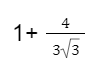
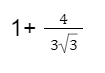

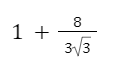

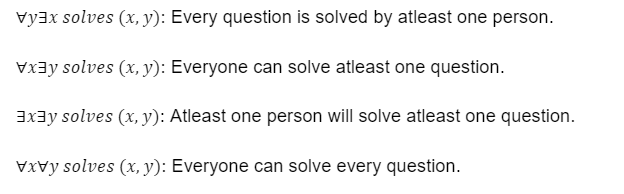
The correct translation of the statement
“Every question in this exam is solved by atleast one person”
it solves (x,y) means x solves y.



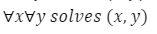
cycle per branch instruction, 5 clock cycle memory instruction. There exists 50% ALU instructions, 20% branch instructions and 30% memory instructions. What is the throughput of the pipeline system in MIPS(million instructions per second)?
P1 = 0x45246B4,
P2 = 0x2648B48,
P3 = 0x82A8A1C,
P4 = 0x36E5380
Which one of the following is TRUE ? [MSQ]
for(i=0; i<111; i++)
A[i] = A[i]*4;
Which of the following is/are true? (MSQ)