Which of the following are not Totally ordered sets.

If A is a set of positive integers less than 200, then Poset [A, ≤ ]

If A is a set of prime numbers less than 25, then poset [A,≤]

If A is a set of divisors of the number 20 then poset [A,/]

If A ={ phi, {a},{a,b}, {a,b,c} } then [A, ⊆ ].

Difficulty Level: 1
Positive Marks: 2.00
Negative Marks: 0.66
A set ‘A’ have 4 elements.Choose the incorrect statement about the powerset of a i.e.P(A)
The number of subsets with 2 elements are more than number of elements of subsets with 3 elements
The number of subsets with zero elements is same as number subsets with 4 elements
The number of subsets with 1 element are more than the number of subsets with 3 elements
The number of subsets with 2 elements are more than the number of subsets with 1 element
Difficulty Level: 1
Positive Marks: 2.00
Negative Marks: 0.66
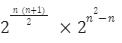
The total number of symmetric relations possible on a set with ‘n’ number of elements
None
Difficulty Level: 1
Positive Marks: 2.00
Negative Marks: 0.66
Let a set A={a,b,c,d} and a relation R defined on A as R= {(a,a),(a,b),(b,a),(b,b),(c,c),(d,d)}

Choose the correct properties of the relation R.


I. Reflexive II. Anti symmetric III. Symmetric IV. Transitive

I, II, III
I, III, IV
II,III,IV
I, II, III, IV
Difficulty Level: 1
Positive Marks: 2.00
Negative Marks: 0.66
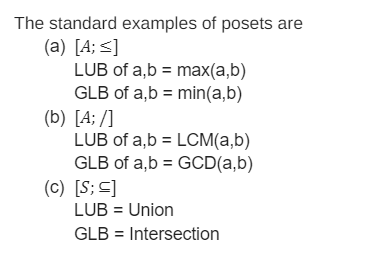
Let [A, #] be a poset, where A is a set and # is an operation.

Choose the correct statement based on #.

Let a,b any elements in the set

if the operation is ‘/” then LUB(a,b) is LCM(a,b)
if the operation is “ * ( multiplication)” then LUB(,b) is LCM(a,b)
if the operation is “ ≤ “ then LUB(a,b) is sum(a,b)
if the operation is “ ⊆” then LUB(a,b) is intersection of (a,b)
Difficulty Level: 1
Positive Marks: 2.00
Negative Marks: 0.66
If Dn is the lattice of divisors of n.

What is the complemented element of the element 6 for the D30

15
3
5
30
Difficulty Level: 1
Positive Marks: 2.00
Negative Marks: 0.66
Which of the following are Semi group

I) set of integers with operation - (subtraction)

II) set of natural numbers with the operation * ( multiplication)

both I, II are semi groups
I is semi group, but not II
II is semi group but not I
both I, II are not semi groups
Difficulty Level: 1
Positive Marks: 2.00
Negative Marks: 0.66
The number of generators of the group G=({1,-1,i,-i}, *) are ______
2
Difficulty Level: 1
Positive Marks: 2.00
Negative Marks: 0.00
Choose the correct matches of equivalences


X. . (P -> Q ) Λ (P -> R) I. P->(Q v R)

Y. (P -> Q) Λ (Q -> R) II. (P v Q) -> R

Z. (P -> Q) v (P -> R) III. P -> ( Q Λ R )

X- III, Y-II, Z- I
X- II,, Y- III, Z-I
X-I, Y-III,Z-II
X-I, Y-II, Z-III
Difficulty Level: 1
Positive Marks: 2.00
Negative Marks: 0.66
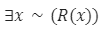
Negate the following statement

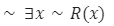
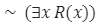
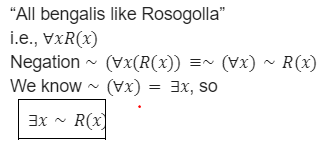
“All bengalis like Rosogolla”

Let R(x): x likes Rosogolla, x: all bengalis
Difficulty Level: 1
Positive Marks: 2.00
Negative Marks: 0.66
Let a function f(x) = 1+a^2.

Choose the correct option about f(x)

One-one not onto
Not one-one, not onto
Not one-one, onto
One one and onto
Difficulty Level: 1
Positive Marks: 1.00
Negative Marks: 0.33
The number of distinct functions from a set with cardinality 3 to a set with cardinality 5 are __
125
Difficulty Level: 1
Positive Marks: 1.00
Negative Marks: 0.00
The sum of the maximal elements of the following poset are ________

10
Difficulty Level: 1
Positive Marks: 1.00
Negative Marks: 0.00
A relation R is said to be Partial order if and only if the Relation R is
Reflexive, Asymmetric, Transitive
Reflexive, Anti symmetric, Transitive
Irreflexive, Symmetric, Transitive
Irreflexive, Asymmetric, Transitive
Difficulty Level: 1
Positive Marks: 1.00
Negative Marks: 0.33
Which of the following are trivial subsets of a set A


I. A

II. ϕ

III. Any subset not equal to A

IV. Any super set of A

I, II
I, II, III
I, II, IV
III
Difficulty Level: 1
Positive Marks: 1.00
Negative Marks: 0.33